Choosing the right trampoline shape can completely change your jumping experience on a trampoline. When it comes to round vs rectangle trampoline options, many parents and buyers often feel confused about which shape trampoline would best fit their backyard, budget and kids' age bracket.
Both round trampolines and rectangular trampolines offer unique benefits in terms of bounce performance, safety features, space usage, and durability. However, the right choice depends on who will use the trampoline, how much space you have, and what kind of trampoline's surface you prefer.
In this guide, we break down everything you need to know about rectangular and round trampolines so you can confidently choose the best one for your home.
Choosing the Best Trampoline Shape for Your Backyard
When comparing round vs rectangle trampoline, the most important factor is how the shape of trampoline affects bounce and control.
A round shape creates a natural pulling effect that guides the jumpers back to the center, making it easier and safer for beginners and younger children. This is why many parents prefer round or oval trampolines for casual backyard use.
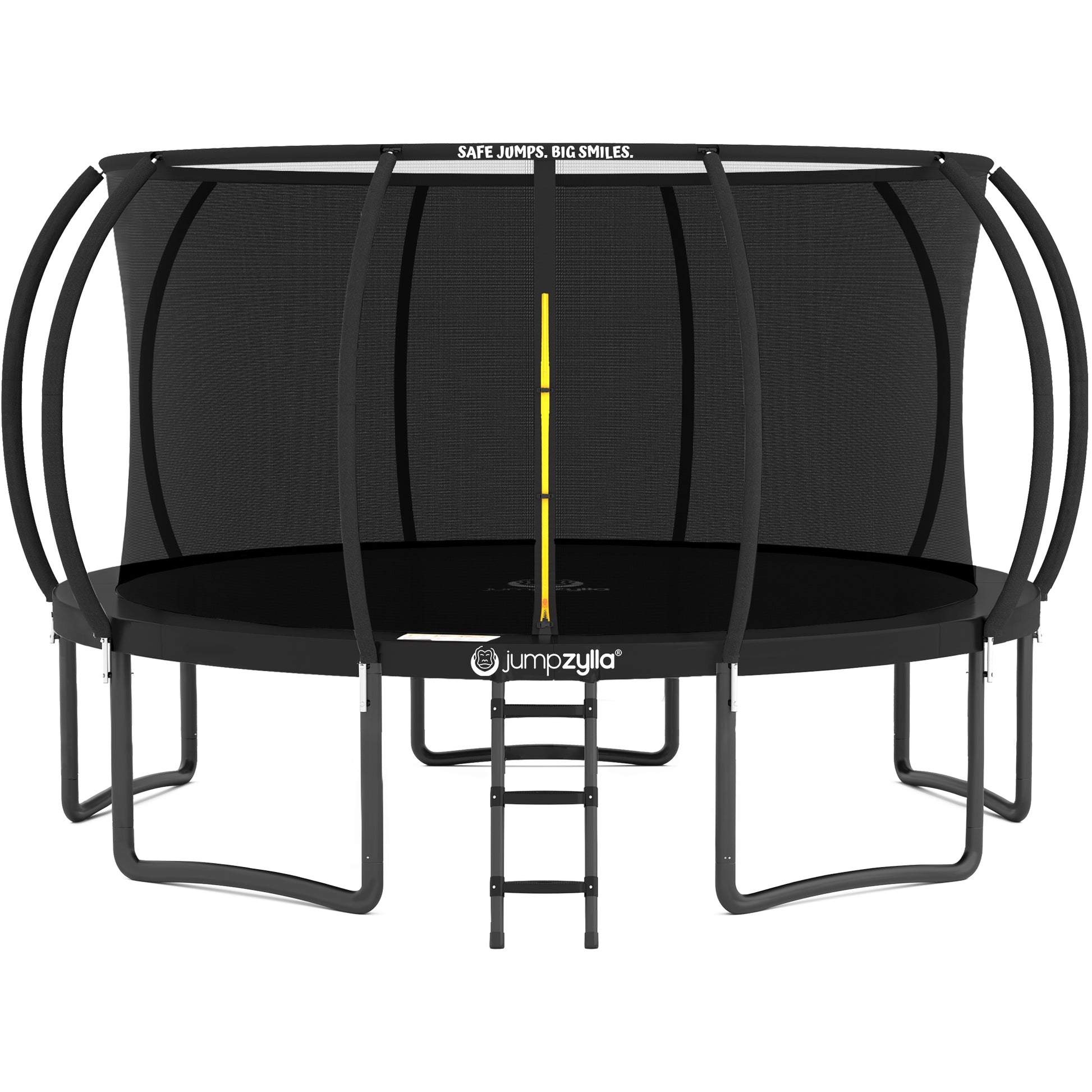
A rectangular shape, on the other hand, gives a stronger and more controlled equal bounce. Since the springs work independently, depending on where you land, the bounce stays even across the whole jumping mat. That’s why rectangular trampolines are often used for gymnastics and advanced training.
Other trampoline shapes, such as an oval trampoline or square trampoline, also exist, but round and rectangular shapes remain the most popular choices.
Key Factors to Consider in Round vs Rectangle Trampoline
To understand the round and rectangle trampoline design properly, lets have a look at some key factors that affect safety, performance, and usability.
-
Bounce Performance and Jumping Experience
Bounce is one of the biggest differences in round trampolines and rectangular trampolines. Round designs provide a softer, more controlled bounce. The energy naturally concentrates towards the center of the jumping area which assists the user to remain balanced. This sometimes means that it may not have the same bounce as other shapes.
However, rectangular models are developed for a better and more consistent bounce. The rectangle trampoline design enables the trampoline to bounce up higher, which is perfect for more advanced users who are looking for greater air time and control. This is the reason why athletes generally prefer rectangular trampoline shape while families with children prefer round trampolines.
-
Safety Features and User Protection
Security is a primary factor to consider when considering round vs rectangle trampoline options. Round trampolines are generally more safe because they:
Help guide the jumper back to the middle: This helps decrease the risk of a fall near the edge or off the trampoline. The user-friendly “center pull” effect helps to keep the user in the safest area on the jumping surface.
Minimize movements to the side: The circular form of the trampoline evenly distributes tension while gently redirecting energy toward the center preventing strong lateral movements. This helps keep the body steady even in the midst of more vigorous jumping.
Are easier to control for younger children: Since the bounce of a round trampoline is more predictable and less aggressive compared to different shapes, round trampolines are particularly recommended for beginners who are just learning how to balance and coordinate.
These properties make round designs more popular among parents when safety and supervision are paramount, especially for younger or less experienced users.
Rectangular trampolines also come with sturdy safety features, but since there's more room to jump around, there's more supervision needed for rectangular trampolines. Most round and rectangular trampolines these days come with a safety net, a padded edge and reinforced frames, for better protection.
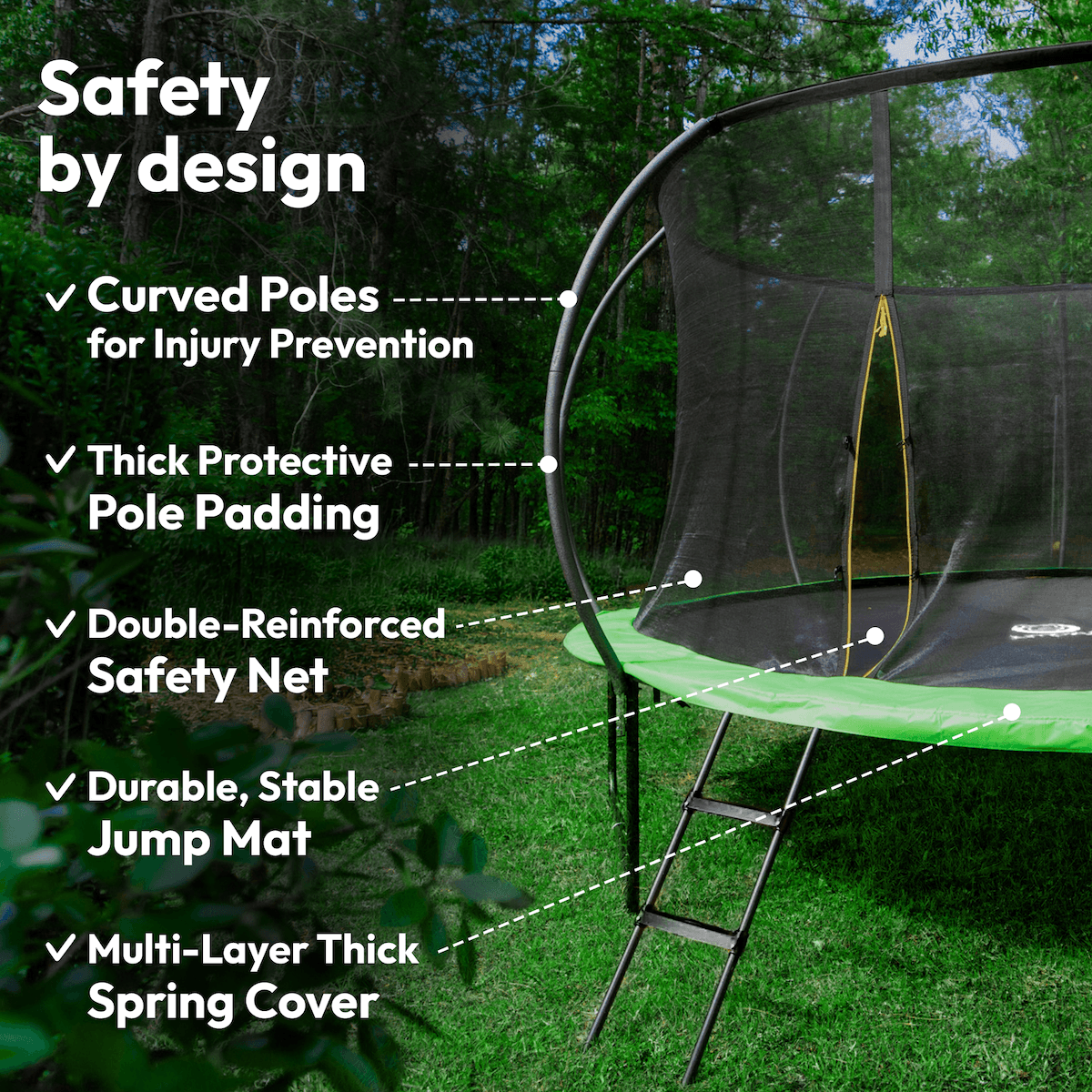
Regardless of what type of trampoline you buy, modern safety options can enhance overall safety. When comparing models, check for curved pole design which minimizes accidental contact when jumping. Additionally, extra thick foam padding helps to cushion the frame and spring area. Furthermore, a double stitched safety net, and a good zipped entrance with extra buckles can also help to keep the jumping area more enclosed and controlled.
Pro-tip: With younger kids in the family, ease of access should be taken into account. A safety anti-slip ladder can make it easier and safer for children to get on and off the trampoline, and prevent slipping and falling.
Moreover, advanced designs feature triple-layer enclosure systems, reinforced net attachments and ground anchoring systems that help ensure stability of the trampoline during use. No matter what the shape of the trampoline is, these features can make a significant impact on the overall safety of the trampoline.
-
Jumping Space and Backyard Fit
Another important factor in the round vs rectangle trampoline comparison is jumping space and yard size. A circular trampoline is ideal for smaller backyards. Its round shape fits easily into compact areas and uneven garden layouts.
However, a rectangular trampoline, provides more jumping space in a structured rectangle shape. Rectangular models usually require more clearance but offer a bigger usable jumping surface. It is better for larger yards where you want a dedicated play or training zone.
-
Durability and Frame Strength
Durability is another key factor when choosing between round vs rectangle trampoline options. It signifies how much weight can a trampoline shape sustain.
Generally, round trampolines distribute tension evenly across the frame, which reduces stress on specific points. This makes them long-lasting for casual family use.
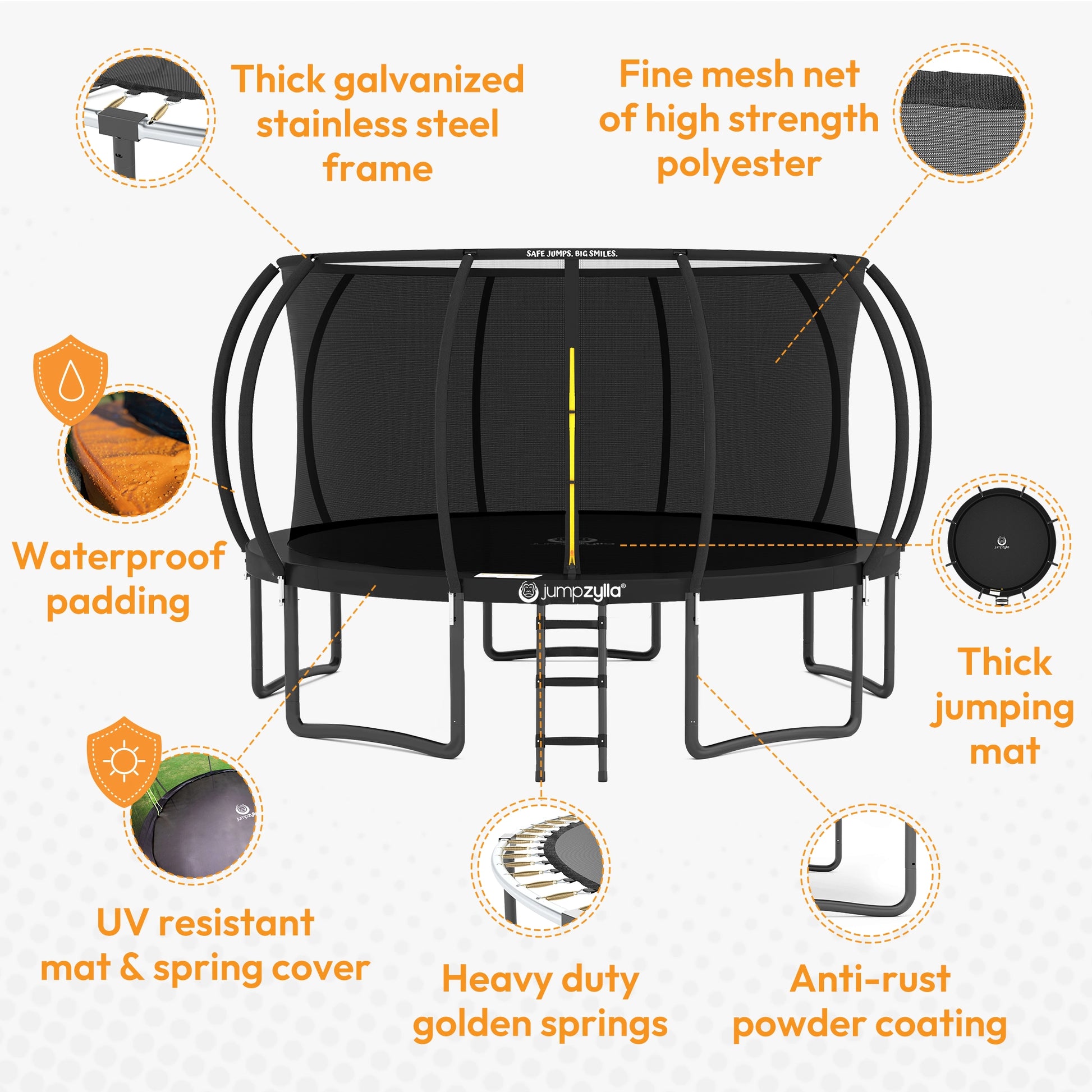
Notably, rectangular trampolines are built with stronger frame strength, often using galvanized steel for extra durability. This makes them ideal for heavy use and professional training.
While both shapes are durable, rectangular models are usually designed for more intense performance and are backed by higher weight limitations.
-
Weight Limit and User Capacity
Every trampoline comes with a weight limit, and this plays a big role in your decision. Round trampolines typically support moderate weight, making them perfect for kids and casual use.
Whereas rectangular trampolines usually support more weight. This makes them suitable for teenagers, adults alike, and multiple users depending on size.
If you need a larger trampoline for mixed-age use, rectangular models are often the better choice.
-
Cost Differences Between Shapes
Price is a major deciding factor when it comes to the round vs rectangle trampoline debate. Round trampolines are usually more affordable due to their simpler structure and lower manufacturing costs. Rectangular trampolines are more expensive because they require:
-
Stronger frame construction
-
Advanced spring systems
-
More durable jumping mat materials
-
Higher engineering precision
So if budget matters to you, round trampolines are more cost-effective but if performance matters more, rectangular models offer better value long-term.
-
-
Jumping Mat and Bounce Technology
The trampoline mat plays a major role in bounce quality. Most modern trampolines use high-quality woven nylon materials for the jumping mat which ensure durability and elasticity.
In rectangular models, the springs work separately, depending on where the user lands. This creates a more controlled bounce across the entire surface. On the other hand, in round trampolines, tension is distributed in a way that naturally pulls users back to the center which makes it easier for beginners to maintain balance.
The quality of the trampoline mat is equally important. A reinforced jumping mat that is made from durable materials can better withstand weather exposure, and higher weight capacities with repeated use. Similarly, advanced spring protection systems help protect users from contact with springs. This also reduces wear on key components that in turn contributes to both safety and longevity.
-
Jumping Area and Usability
The jumping area differs significantly between shapes. Round trampolines offer a more centralized jumping zone, which is ideal for casual fun. Whereas, rectangular trampolines offer a wider and more predictable jumping space, which helps users practice tricks and improve control. This makes rectangular models better for structured training, while round trampolines are better for relaxed family use.
Round vs Rectangle Trampoline: Quick Comparison Table
|
Feature |
Round Trampolines |
Rectangular Trampoline |
|
Shape |
Circular shape |
Rectangle shape |
|
Bounce Height |
Controlled, softer |
Higher bounce, powerful |
|
Safety |
Guides back to center, beginner friendly |
Requires more skill and more supervision |
|
Jumping Space Efficiency |
Good |
Excellent |
|
Weight Limit |
Moderate |
Higher |
|
Frame Strength |
Balanced |
Heavy-duty galvanized steel |
|
Best For |
Younger children, families and casual use |
Gymnastics, training and advanced jumpers |
|
Cost |
More affordable |
More expensive |
|
Bounce Performance |
Consistent but lower |
Best bounce and control |
Final Words
Ultimately, there is no definitive answer to the debate between a round trampoline or a rectangle trampoline; it depends upon the needs of your family, space available and how you plan to use the trampoline. Round trampolines are a great choice for younger children. Rectangular trampolines, on the other hand, provide better bounce and control for advanced jumpers.
Regardless of the size or form you select, it is important to place value on quality build and safety attributes. When researching trampolines, you should look for safety features such as reinforced mat for jumping, a good enclosure system, plenty of protective padding, spring protection and secure anchoring. Jumpzylla trampolines might be worth considering if you're searching for a trampoline and deciding which shape is more fun, long lasting and provides all the safety features possible. Their well-thought-out safety features ensure families can enjoy a safer and more confident jumping experience in the backyard.
Frequently Asked Questions (FAQ)
Are round trampolines safer for kids?
Yes, in most cases round trampolines are safer for kids. When comparing the round vs rectangle trampoline, the round one will attract people towards the center so they are less likely to fall off the trampoline. They're great for the younger kids and beginners. But safety also relies on correct installation and safety net use along with supervision.
Which trampoline shape provides the highest bounce?
A rectangular trampoline provides the highest bounce. The energy transfer is more efficient through the jumping surface because of the independent action of the springs provides a powerful yet controlled jump. This is why the rectangular models are preferred for gymnastics and athletic training where their bounce performance matters.