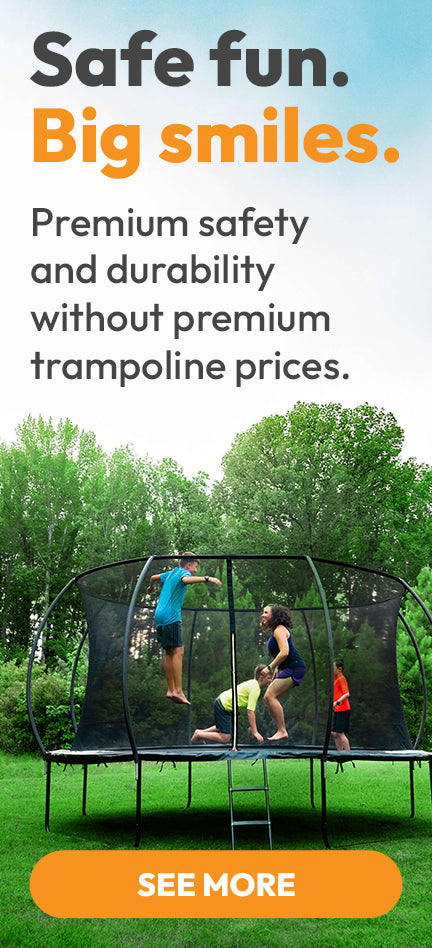
Buying a trampoline is an exciting investment that can provide endless hours of outdoor fun, encourage physical activity, and bring the whole family together. Choosing the right model of the trampoline is essential for both safety and long-term value as kids and adults enjoy casual bouncing alike.
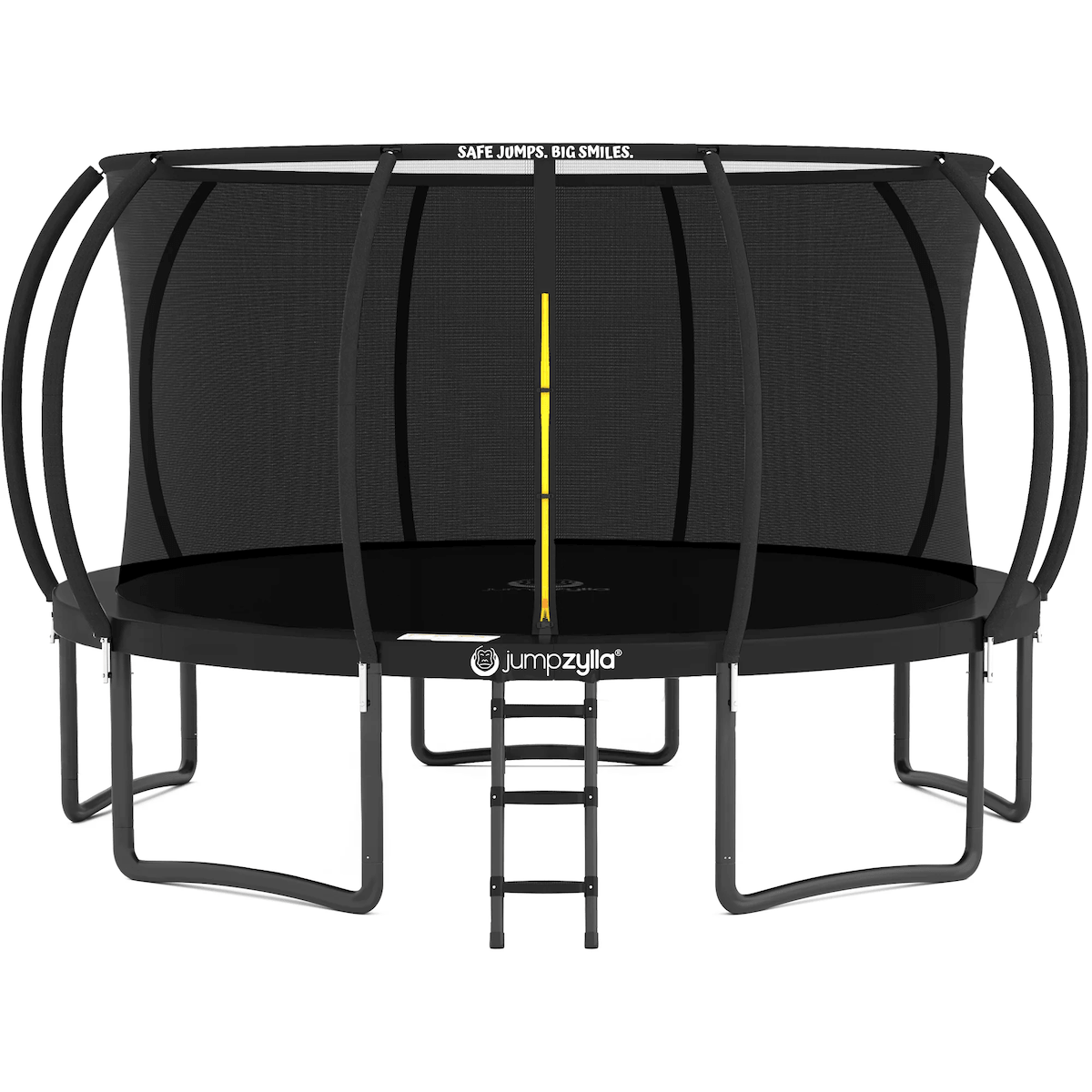
Today’s trampolines come in a wide range of sizes, shapes, and designs. You can opt for compact backyard trampolines if you have a smaller garden or go for a premium springless model with advanced safety technology. Once you know what to look for when buying a trampoline can make a big difference in finding the perfect fit for your family.
A quality trampoline encourages exercise, supports cardiovascular health, improves coordination, and gets kids away from screens. This trampoline buying guide covers everything you need to know before buying a trampoline.
Why Choosing the Right Trampoline Matters
A trampoline should provide years of safe enjoyment, not constant repairs or safety concerns. The right trampoline offers a safer jumping experience, better bounce performance, greater durability, lower maintenance costs, enough space for comfortable jumping and long-term value for your investment.
A higher quality trampoline may cost more initially, but eventually it would last longer and perform better than cheaper alternatives.
Measure Your Space Before Buying
One of the biggest mistakes people make when buying a trampoline is underestimating how much space they need. Before you begin shopping, use a measuring tape to calculate your available outdoor space. Remember that the trampoline itself is only part of the equation. You also need safe lateral clearance space around it and additional safe clearance space above it to prevent accidents.
Most manufacturers recommend leaving at least 3 to 6 feet of clear space around the trampoline. While installing, you need to make sure there are no tree branches, fences, sheds, or power lines overhead. Furthermore, you should also consider availability of the whole space, level of the surface, distance from trees and fences, clear overhead space and easy visibility for adult supervision.
When you take time to measure properly it helps ensure you purchase the right size trampoline for your family instead of finding out it’s too large after delivery.
1. Choose the Right Trampoline Size
Size of a trampoline is the most important factor to consider when buying one. The best size of a trampoline depends on availability of the yard space, age of the users, number of jumpers, purpose of use and of course, the budget. Here’s a general guide of trampoline range for you to get started:
|
Trampoline Size |
Best For |
|
6–8 ft |
Toddlers and small children |
|
8–10 ft |
Small backyards |
|
10–12 ft |
Families with younger children |
|
12–14 ft |
Average families |
|
14–16 ft |
Multiple jumpers |
|
16+ ft |
Athletes and larger families |
While a larger trampoline offers a bigger jumping area and better bounce, it also requires more outdoor space and additional safety clearance.If you expect several family members to use the trampoline regularly, investing in a slightly larger model will be a good idea.
2. Choose the Right Type of Trampoline
All trampolines are not built for the same purpose. Once you understand the different types of trampolines, you can select the right trampoline for your family’s needs.
-
Backyard Trampolines
Backyard trampolines are the most popular choice for residential use. They are designed for recreational jumping and come in a variety of sizes and price ranges. Most backyard trampolines include a safety enclosure, jumping mat, steel frame, safety pads and a ladder (optional). These features provide excellent value for families who are looking for everyday outdoor fun.
-
Above Ground Trampolines
Above ground trampolines sit on steel legs and are the easiest models to install. These trampoline models have lower installation cost, wide range of sizes, can be relocated easily and support excellent bounce performance. Due to these benefits, these are considered the most common type of trampoline model available today.
-
In-Ground Trampolines
In-ground trampolines are installed so the jumping surface sits close to ground level. They are easier to access, have a reduced fall height, a cleaner space, and better integration into landscaping. However, they generally cost more because excavation and drainage are required to install them.
-
Traditional Spring-Based Trampolines
Traditional spring based trampolines use steel springs to connect the jumping mat to the frame. They have gained widespread popularity because they produce excellent bounce, readily available, lower in cost when compared to springless trampolines and they come in numerous sizes. Moreover, the modern versions also include thick safety pads that cover the springs to reduce injury risks.
-
Springfree Trampolines
A Springfree trampoline works differently from traditional models. Instead of using steel springs, the new springfree trampoline's frame use flexible composite rods.
They are often manufactured from fiberglass rods that are positioned beneath the jumping surface. These mat rods flex to create bounce while eliminating exposed springs. Additional safety features include a hidden frame, flexible net rods, SoftEdge mat and FlexiNet enclosure.
Since the frame and rods lie beneath the jumping surface, you are less likely to make contact with hard components during use. Although a Springfree trampoline typically costs more, many families appreciate its innovative safety-focused design.
3. Choose the Best Trampoline Shape
The shape of the trampoline affects both bounce performance and available jumping space.
-
Round Trampolines
Round trampolines remain the most popular choice for families. Primarily because they naturally direct jumpers back toward the centre of the jumping surface. It further helps reducing accidental movement toward the edges.
If you’re buying your first trampoline, round ones are often the safest starting point as they are affordable, super easy to find, great for casual jumpers and suitable for children.
-
Rectangular Trampolines
Rectangular trampolines provide the highest and most consistent bounce. They are commonly used by gymnasts, cheerleaders, athletes and advanced jumpers. Unlike round trampolines, they offer consistent bounce across the entire jumping area.
-
Oval Trampolines
Oval trampolines combine the benefits of round and rectangular designs. These advantages include longer jumping space, better bounce than round models, excellent for narrow yards and suitable for multiple jumpers.
-
Square Trampolines
Square trampolines maximize usable jumping surface while fitting neatly into many backyards. They provide an even bounce, efficient use of space and larger jumping area than comparable round models.
4. Never Compromise on Safety Features
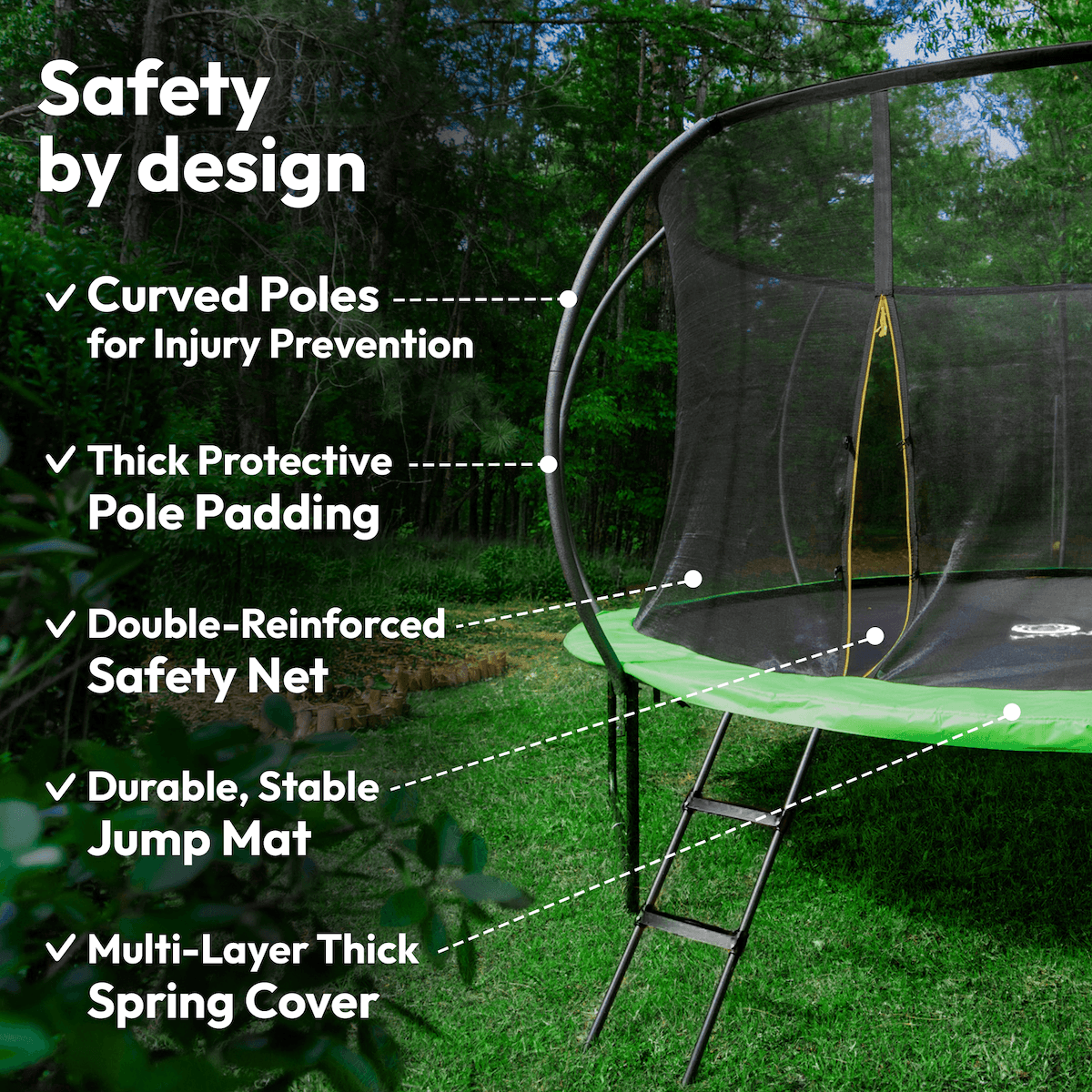
Safety should always be your highest priority when buying a trampoline. The best trampoline models include several important safety features that are designed to protect jumpers and prevent injuries.
-
Safety Enclosure and Safety Net
A quality safety enclosure prevents users from falling off the trampoline. When you are considering safety features in a trampoline, look for UV-resistant enclosure net, reinforced stitching, secure zipper entrance and durable flexible net rods. These features help protect jumpers while ensuring jumpers remain inside the jumping area.
-
Thick Safety Pads
Safety pads cover the springs and frame. so you need to choose thick, weather-resistant padding that cushions jumpers if they accidentally land near the edges.
-
Hidden Frame Designs
Some premium springless trampolines feature a hidden frame that sits below the jumping surface. These hidden frames reduce impact points even further.
-
Strong Construction
The safest trampolines use durable materials throughout the frame, net, and jumping mat. High-quality construction means reduced risk of equipment failure. It also helps prevent serious injuries.
5. Check the Weight Limit
Every trampoline has both a recommended weight limit and a maximum weight capacity. Exceeding these limits places unnecessary stress on the frame, springs, and jumping mat.
Before purchasing, you need to consider the number of users, ages of jumpers, combined user weight and future family needs. Buying a trampoline that has a higher maximum weight capacity will help improve durability, even if it will used by children.
Moreover, a trampoline model with a generous weight rating also accommodates growing children and occasional adult supervision without compromising performance.
6. Examine the Frame Quality and Construction
The frame is the backbone of any trampoline. A sturdy, well-built frame provides stability, improves safety, and extends the life of the equipment. When comparing trampoline options, don’t just focus on the jumping surface, pay close attention to the materials that are used in the frame.
The best trampolines feature rust resistant galvanized steel frames with reinforced joints. Galvanization adds a protective coating that helps prevent rust and corrosion. This makes the trampoline more resistant to rain, humidity, and changing weather conditions.
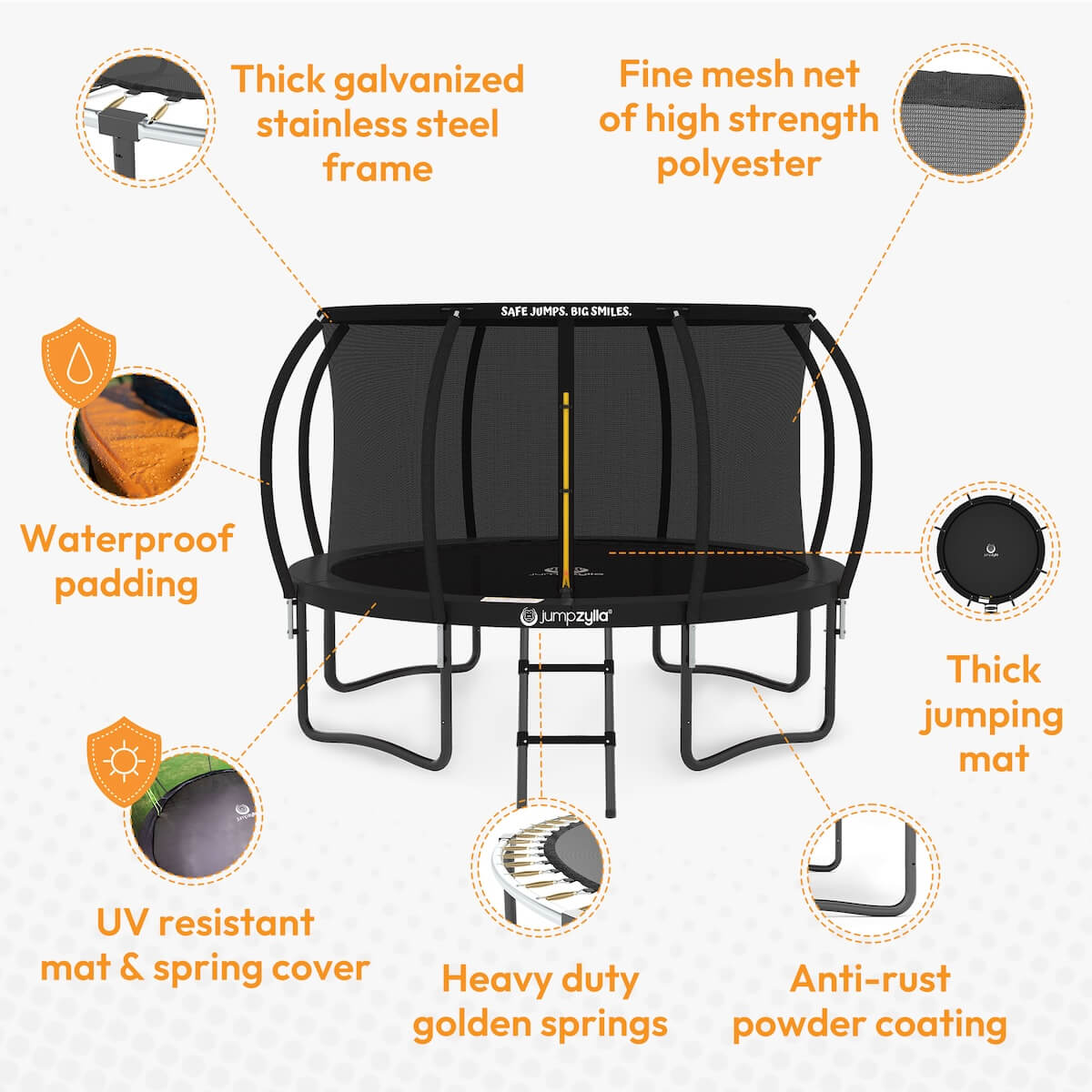
While considering frame quality, look for features such as rust resistant galvanized steel construction, thick steel tubing, reinforced welded joints, weather-resistant finish and heavy-duty leg supports.
A higher quality trampoline may cost more upfront, but a durable frame can significantly reduce maintenance costs and improve the overall lifespan of your trampoline.
7. Evaluate the Jumping Mat and Bounce Performance
The jumping mat is where all the action happens, so its quality directly affects both safety and performance. Most trampolines use polypropylene mats because they are strong, flexible, and UV resistant. A good jumping mat should provide consistent bounce while resisting stretching, tearing, and sun damage.
When comparing models, inspect the quality of the jumping surface, UV-resistant material, reinforced stitching, number of attachment points and overall flexibility. A well-designed jumping surface distributes force evenly which results in a smoother and more controlled bounce.
Spring Count and Spring Quality
If you’re purchasing a traditional spring-based trampoline, you need to consider the spring length, spring thickness, galvanized finish and spring tension. Longer, high-quality springs generally produce a softer, higher bounce than shorter springs.
Premium models also include thicker safety pads that completely cover the springs. They help cushion jumpers if they accidentally land near the edges.
8. Consider Weather Resistance
Since most trampolines stay outdoors throughout the year, weather resistance is essential. Rain, snow, UV rays, and strong winds can all shorten a trampoline’s lifespan if it is built with low-quality materials.
If you live in an area prone to inclement weather, consider purchasing additional accessories such as weather covers, anchor kits and wind stakes.These accessories help protect your trampoline and reduce the likelihood of damage during storms.
9. Think About Accessories and Extra Features
Many modern trampolines include optional accessories that improve convenience, safety, and enjoyment. Popular accessories include:
-
Trampoline Ladder: A ladder makes it easier for younger children and older adults to climb onto the trampoline safely.
-
Basketball Hoop: Many families enjoy adding a basketball hoop to make jumping even more entertaining.
-
Anchor Kit: Strong winds can move or even overturn a trampoline. Anchor kits secure the frame to the ground and improve stability.
-
Weather Cover: A weather cover protects the jumping mat, springs, and safety pads from prolonged exposure to sunlight and rain.
10. Compare Price vs Long-Term Value
Price is often the deciding factor when buying a trampoline. A low-cost trampoline may seem like a bargain initially, but cheaper models often use thinner steel, lower-quality mats, and less durable safety components. Investing in a higher quality trampoline often provides better value over time because it requires fewer repairs and lasts much longer.
Average Price Ranges:
|
Trampoline Type |
Typical Price |
|
Small children’s trampolines |
$100–$300 |
|
Standard backyard trampolines |
$300–$800 |
|
Premium family trampolines |
$800–$2,000 |
|
Springfree trampolines |
$1,200–$3,000+ |
Common Mistakes to Avoid When Buying a Trampoline
Even experienced buyers can make costly mistakes. Avoid these common pitfalls when choosing a trampoline.
-
Buying Based Only on Price: Cheaper isn’t always better. Lower-priced models often compromise on materials, safety, and durability.
-
Choosing the Wrong Size: Many families underestimate how much space a trampoline requires. Always measure your available outdoor space before making a purchase.
-
Ignoring the Weight Capacity: Never assume every trampoline can support multiple users. Always check both the recommended weight limit and maximum weight capacity.
-
Overlooking Safety Features: Never purchase a trampoline without a quality safety enclosure, safety net, and thick safety pads. These features play an important role in helping prevent falls and reduce the risk of trampoline related injuries.
-
Forgetting About Maintenance: Like any outdoor equipment, trampolines require regular care. Periodically inspect the frame, springs, jumping mat, enclosure net, and hardware to ensure everything remains in good condition.
Final Words
Choosing the right trampoline involves much more than selecting the first model that fits your budget. You may prefer traditional spring-based trampolines or one of the new springless trampolines, understanding what to look for when buying a trampoline will help you make a confident purchase.
The best trampoline is one that matches your available outdoor space, supports your family’s needs, and includes high-quality safety features designed to protect jumpers. While a higher quality trampoline may require a larger initial investment, its superior durability, performance, and longevity often make it the smarter choice in the long run.
FAQ
When Is the Best Time to Buy a Trampoline?
The best time to buy a trampoline is typically during the off-season, particularly in late autumn and winter when demand is lower. You can also find excellent deals during major sales events such as Black Friday, Cyber Monday, Memorial Day, and Labor Day.
Which Shape of Trampoline Is Best?
Round trampolines are ideal for families and recreational jumping, rectangular trampolines are preferred by gymnasts and athletes for their consistent bounce, while oval and square trampolines offer a balance of jumping space and performance for larger families.